
What Great Opening Lines Really Do
Beyond hooks and questions, first sentences establish tone, texture, and the reader’s emotional contract with the book.

Most advice about opening lines sounds the same: hook the reader, raise a question, drop us into the action. All true and advice I’ve given my students many times, but it leaves out something as important: texture and tone. A great opening prepares you to read the book. It establishes an unspoken contract between writer and reader: this is what kind of book you’re about to read—deliciously dark, comedic and wry, serious and straightforward, absurd and destabilizing, etc.
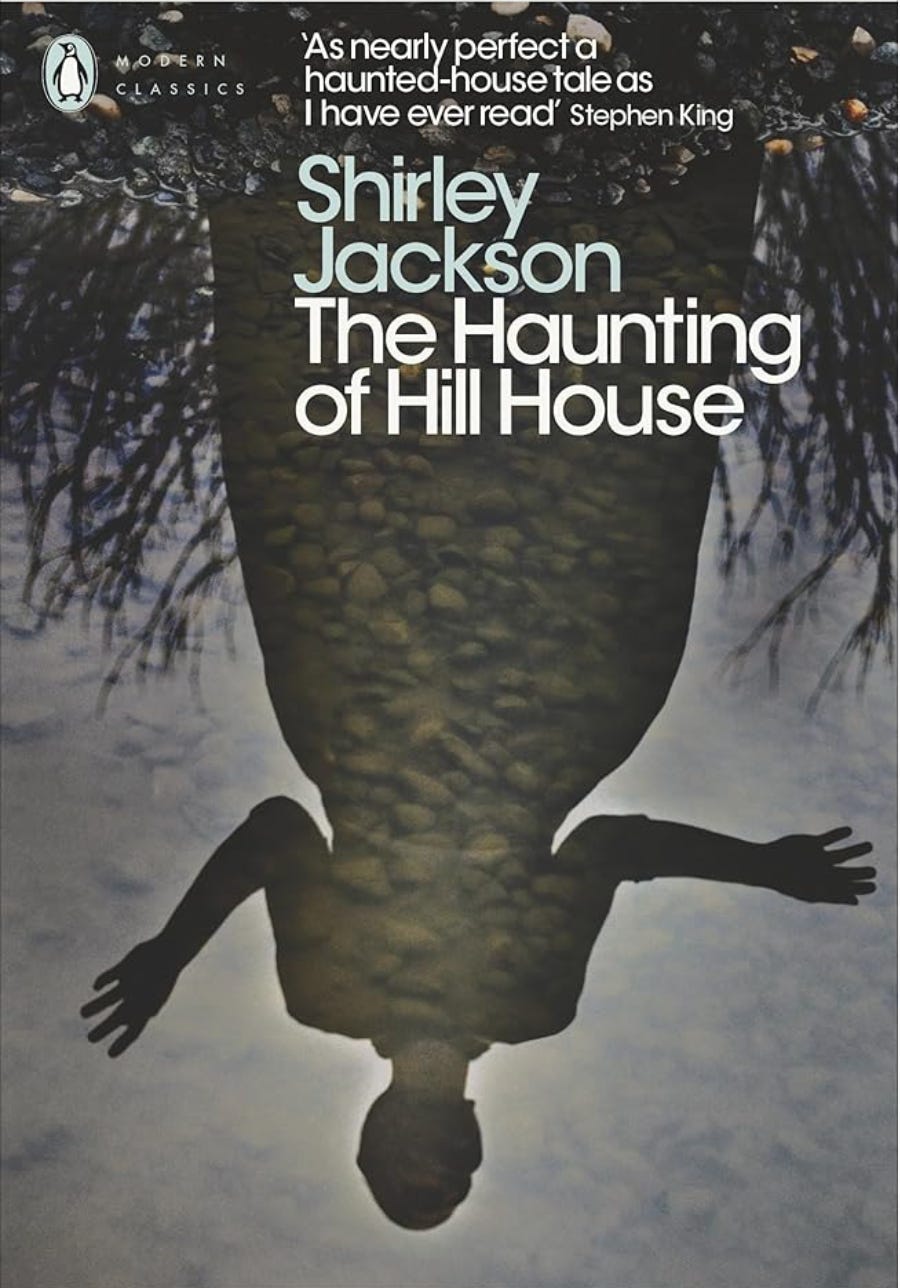
Let me show you what I mean with one of my favorite openings in literature:
“No live organism can continue for long to exist sanely under conditions of absolute reality; even larks and katydids are supposed, by some, to dream. Hill House, not sane, stood by itself against the hills, holding darkness within; it had stood so for eighty years and might stand for eighty more. Within, walls continued upright, bricks met neatly, floors were firm, and doors were sensibly shut; silence lay steadily against the wood and stone of Hill House, and whatever walked there, walked alone.”
That’s Shirley Jackson. The Haunting of Hill House. Three sentences, and you already know everything you need to know, not about plot, but about the kind of story this is going to be.
Read the first sentence again. Jackson doesn’t tell you the house is haunted. She tells you that sanity can’t bear the weight of absolute reality. It’s a philosophical position: we’re not talking about ghosts. We’re talking about facing reality and the psychological cost of doing so. By the time she says the house itself is “not sane,” you sense that Hill House has been warped by something that exceeds psychology. Jackson was deeply interested in witchcraft, folklore, and the occult, and the novel brilliantly weaves them together: the cost of facing reality and the possibility that reality itself contains forces we can’t rationally account for.
The second and third sentences offer contrast. The walls are upright, the bricks are neat, the floors are firm. Everything is in its proper place, every sensible door shut. That accumulation of orderliness presents something that looks, at first sight, real and sane, but suggests the opposite. Order and sanity, in this place, will be a mask. The house isn’t at peace. An eerie warning to those who enter its doors and, perhaps, open the pages of this book.
That last clause—“whatever walked there, walked alone”—has a double function. It’s measured, stately, a touch melodramatic; not exactly humorous, but it prepares us for the moments of dark humor to come, a signature trait of Jackson’s writing. It also tells us, before we even meet Eleanor, our main character, the central theme: loneliness, perhaps the source of real madness, is introduced before the story has really begun.
Consider what Jackson accomplishes. She orients us (a house with a history, a name, and power—it will last on); she establishes the central problem (the threat to sanity, the thing walking in darkness); she drops us into a mood and point of view rather than a scene.
Now think about what she doesn’t do. She hasn’t introduced a character yet. She doesn’t begin with dialogue. She doesn’t open with someone arriving at the house on a dark night. She starts farther back, or farther above (narratively speaking), with a claim about the nature of reality, which turns out to be exactly the right place to start this particular novel.
That’s what’s challenging about teaching openings: there are rules, sure, but the best writers know how to break them to great effect, so you can’t say, just do these two or three things, and you’ll have a great opening. It’s never that simple.
When I work with students on their first pages, I give them seven opening lines and ask them to rank from most to least effective. Here they are. I’ll reveal the authors below, so read them cold first:
“When the lights went off the accompanist kissed her.”
“Ten days after the war ended, my sister Laura drove a car off a bridge.”
“The train tore along with an angry, irregular rhythm.”
“My husband, Charlie Willett, disappeared from a psychiatric hospital in the Berkshires on January 7, 2012.”
“Small trees had attacked my parents’ house at the foundation.”
“It was a bright cold day in April, and the clocks were striking thirteen.”
“It was a wrong number that started it, the telephone ringing three times in the dead of night, and the voice on the other end asking for someone he was not.”
Here’s what I tell them after they’ve committed to a ranking: every one of these lines opens a celebrated, widely read novel. There are no ringers. The exercise isn’t about separating the good from the bad. It’s about understanding what different kinds of effective openings actually do.
Students never rank them the same way twice. Every class produces a different order, and the arguments get heated. But two lines win more often than the others: #2 and #6. Let me go through all seven.
#1 is Ann Patchett opening Bel Canto. It’s a single act of desire, an affirmation of life before the plunge into darkness. Notice what Patchett omits: there’s no comma after “When the lights went off.” She refuses the pause, pushing us directly into the action, in medias res. And the plot begins. Why did the lights go out? Who exactly is kissing, and why? What unfolds is far more dramatic: the beginning of a hostage-taking scenario by terrorists, though human connection remains central to the novel’s themes.
#2 is Margaret Atwood’s The Blind Assassin, the consistent class favorite and mine. The war has just ended, in this case, the Second World War. The narrator’s sister has driven a car off a bridge. Ten days separate those two facts, raising a question of causality. What did the war have to do with Laura’s death? Was her death an accident or a suicide? A central relationship is established immediately. This will be a book about sisterhood and the grief and guilt bound up in that relationship. Atwood doesn’t explain; she implies a totality.
#3 is Patricia Highsmith, Strangers on a Train. The sentence is technically interesting—its rhythm actually is irregular, which is a nice piece of mimetic craft. But the train being angry doesn’t give us enough to hold in terms of theme or character, though it does set the mood. Highsmith was twenty-nine when she wrote it, still finding her footing. She would get considerably more unsettling and stylistically adept in future novels.
#4 is Paul La Farge, The Night Ocean. The sentence is journalistically precise—a name, a date, a location—and that precision signals a credible narrator. Students often rank this one low because it seems stilted and bland. The psychiatric hospital in the Berkshires on a specific January date isn’t just reportage; it’s documentary specificity. The line suggests narrative distance; a trusted narrator with an objective remove on what is to follow, although soon we’ll realize it’s more an attempt at that distance than an achievement of it.
#5 is Louise Erdrich’s The Round House, and it’s routinely underrated in the exercise. “Small trees had attacked my parents’ house at the foundation.” That verb puts us immediately inside an adolescent’s perception: exaggerated, slightly feral, animating the natural world against the human. The whole novel is about exactly that: what assails the home, and what the home fails to protect.
#6 is George Orwell, Nineteen Eighty-Four, and it shares the top spot with Atwood in most classes. It announces its strangeness with a single word, “thirteen,” placed where you’d least expect it, at the tail of a sentence that seems to promise normalcy. The effect continues to work well. The world is off by exactly one, and you feel the cockeyed slant of Oceania before you can articulate it. (Admittedly, my students often have a familiarity with Nineteen Eighty-Four, which may add to its popularity.)
#7 is Paul Auster, City of Glass, and it’s craftier than it appears. That long, winding clause—the telephone ringing three times in the dead of night, and the voice on the other end asking for someone he was not—enacts the confusion it describes. The sentence meanders the way a half-asleep person processes a wrong number. Auster is inside his character’s consciousness before the reader has been formally introduced to anyone. Also, it hints at the postmodern detective novel to follow.
All three criteria—hook the reader, raise a question, drop us into the action—are useful guidelines, but not a checklist. Only a few of these first lines accomplish all three: Ann Patchett’s Bel Canto, Margaret Atwood’s The Blind Assassin, and Paul Auster’s City of Glass. The others are effective through other means, whether that’s dissonance, personification, or a single eye-raising detail, “striking thirteen,” which points to what every example here actually shares: tone and texture. A great opening not only makes a powerful first impression; it also communicates what kind of book the reader is entering, establishes trust, and guides them in their reading.
Here’s the question I ask of my own work and when workshopping students: don’t start by asking how much information the opening line delivers, or even how “hooky” it is. Ask what emotional impression it makes. What chord, or chords, does it strike? Does that feeling prepare the reader for the novel that follows? A great opening doesn’t have to squeeze in every detail. It has to calibrate the reader’s emotional expectations so the first line and the rest of the book feel like they belong to the same world.
Let me know which of the first seven lines above is your favorite and why?
Pre-order here!

This was amazing! What an inspiring way to start the day. Thank you. And I love the phrase emotional impression. That is how I experience every book I read - I am left with emotional impressions. I will be thinking about this when I sit down to write today.