
Writing Across Difference Is Just Writing Well
Two kinds of research. Most writers underestimate both.

Reading fiction—identifying with a character who isn’t you—is a workout for empathy. You’re exercising an emotional muscle.
We live in a moment when certain men with large platforms treat empathy as weakness and introspection as a waste of time. Tech billionaires, the lookmaxxing contingent, manosphere podcasters: the whole performative-dominance complex. They’re wrong, but their error is revealing. Empathy requires vulnerability, and vulnerability requires strength. Reading fiction, inhabiting lives unlike your own, is how you build it. The bravado is a tell. They can’t afford empathy because it might crack them open.
Those of us who stay committed to a reading and writing culture understand, at least instinctively, what the whole enterprise is for. Storytelling is about self-understanding, but self-understanding can’t happen in isolation. We need other people to see ourselves clearly. A mirror that only works when you’re looking at someone else.
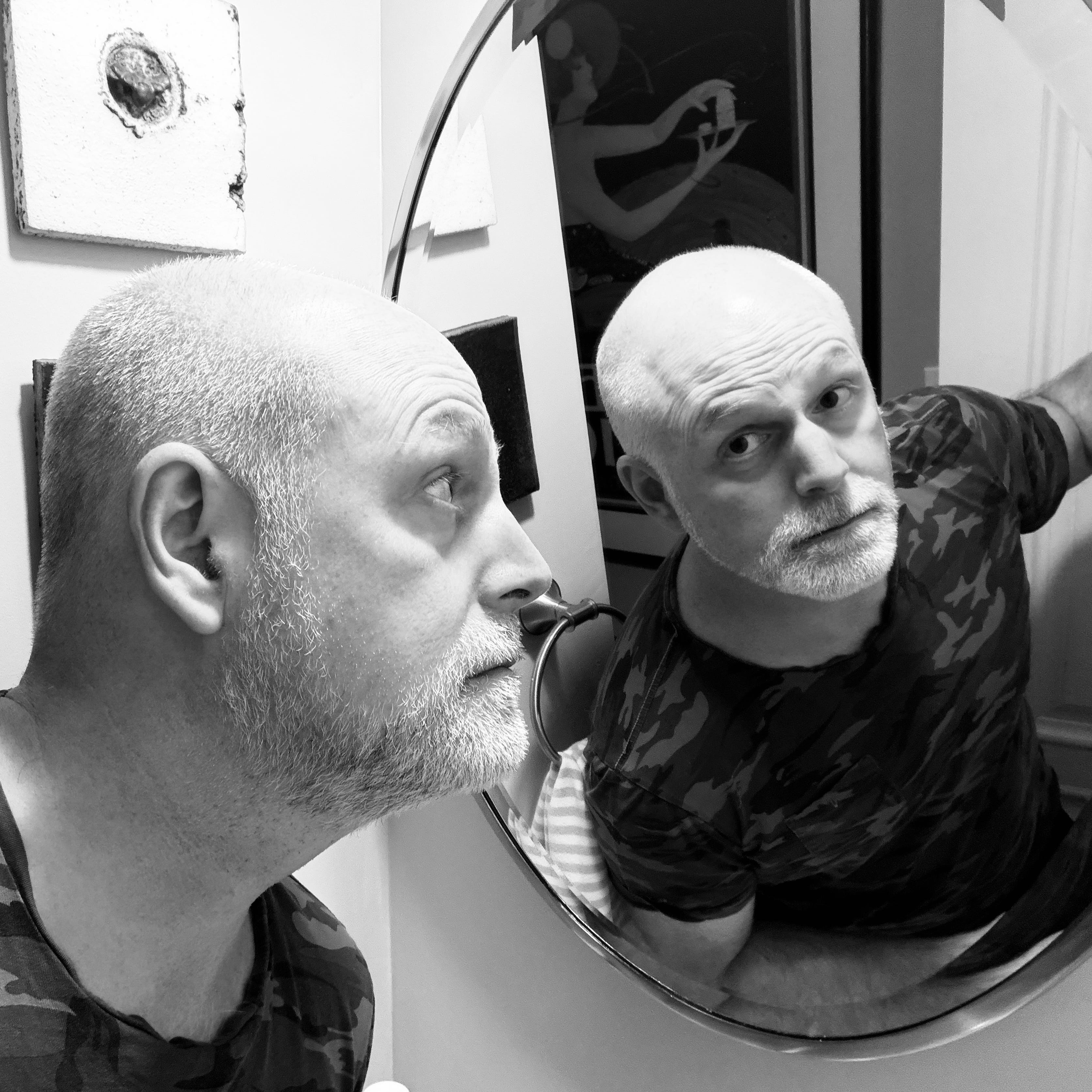
The information environment we’re swimming in runs the opposite direction. It’s engineered for extreme reactions—simplification, polarization, and, of course, outrage. A mirror that reflects back only you—a simplified version of you at that. Fiction slows things down. It puts you inside a consciousness that isn’t yours and asks you to take it seriously. Something we need to do to be in touch with our humanity.
Which is why writing a character different from you isn’t a special category of risk. It’s the job of a writer. Empathy is the point. It’s the reason we write characters at all, the reason readers stay up too late turning pages. Get the character wrong, and you’ve failed. Get them right, and you’ve done what fiction is supposed to do: made another human being real enough that readers can see themselves in that person’s experience. For me, it’s what great characters did as a reader that made me want to write them, and in turn, offer that experience to someone else.
There’s a debate in writing and publishing circles about whether writers should cross lines of identity at all. Can a straight writer inhabit a queer character? Can a white writer go inside a Black character’s experience? The debate is worth having, but it tends to get stuck on the wrong question. The question isn’t whether you’re allowed. It’s whether you’re willing to do the work.
Rebecca Makkai, whose novel The Great Believers centers on a group of friends navigating the AIDS crisis in 1980s Chicago, wrote about this in a LitHub essay. “I’m sympathetic to arguments that artists need to stay in their lanes,” she wrote. “I also believe preemptive judgment of work based on its premise, not its merits, is ridiculous. I don’t need to apologize for writing across difference; I need to apologize if I get it wrong.” That’s the right frame. The ethical problem isn’t the attempt. It’s the laziness, the shortcuts, the assumption that good intentions are enough.
I’ve been on enough LGBTQ+ writers’ panels to know what the lazy version looks like. The audience—usually straight readers and writers—asks some version of: “If I want to write a queer character, what pitfalls should I avoid?” Panelists mention research, flag tropes: the “gay best friend” who exists only to serve the straight protagonist’s journey, or “bury your gays,” the habit of killing off queer characters to generate pathos for straight ones. Most of those tropes come from the same root problem: centering straight lives in queer stories.
But sometimes the conversation surfaces something more troubling. A writer once told me she wouldn’t write a queer point-of-view character. She’d include LGBTQ+ characters—she had strong feelings about diversity and inclusion—but she’d never go inside one’s perspective because, she said, “that’s when you get into trouble.” She wasn’t being malicious. She just wasn’t willing to take the risk or do the homework. So her queer characters stood at the edges of her stories, present but never fully seen, useful but never centered.
That’s not inclusion. That’s marginalization.
The alternative isn’t fearlessness. It’s rigor. Writing across difference requires two kinds of research, and most writers underestimate both. The first is external: reading widely, talking to people, learning history, understanding context. If you’re writing a queer character in 1950s Washington, DC, you read The Lavender Scare by David K. Johnson. You find the oral histories. You don’t just absorb the facts; you absorb the texture of lives lived under a particular set of circumstances.
The second kind is internal, and it’s harder. It means examining the stories your own community handed you, especially the biases baked into your upbringing and the gaps in your imagination you don’t yet know are there. This research changes your writing because it changes your perception.
I grew up in Marion, Virginia, a small Appalachian town, and attended an all-boys prep school where the curriculum was shaped by the perspectives of dead white men. I came out in my thirties, after years of performing a version of myself to fit in and avoid being cast out or, worse, being subject to violence. I know what it costs to stay at the margins of your own story. I also know that doing the internal work, exploring how conditioning influences your imagination (and your tastes), is not comfortable. It’s also not optional if you want to write characters who feel like people rather than placeholders. You have to do the work and keep doing it. I am.
Over the next few months, I'll be writing here about self-research, counternarratives, character development, sensitivity readers, and what it actually means to write responsibly across difference. Each post draws on a lecture I gave at the University of Nebraska Omaha’s MFA program and expands on an article I wrote for Writer’s Digest called “Writing Across Difference: Responsibly Writing Characters Different From You.”
If you’re in the DC area, we’re starting the conversation in person. On July 9th at 7 PM, One More Page Books in Arlington is hosting Queer Characters in Crime Fiction—a panel with Aggie Blum Thompson, Diana DiGangi, Stephen Spotswood, and me. We’ll be talking about what it takes to write queer characters with honesty and care inside a genre with its own fraught history of representation.
I'll also be moderating Jennifer Squared at Book People in Richmond on July 11th from 1–3:30 PM. Jennifer van der Kleut and Jennifer Pashley both write psychological thrillers, but they come at the genre from very different angles—and that conversation, about how two writers can work in the same form and arrive at completely different places, is one I'm looking forward to.
Come if you can!


I think there are a few more questions to ask yourself when you are considering characters outside your experience. Is it your story to tell? Why do you want to tell that story? Are you taking space from a marginalized writer?
"Fiction slows things down. It puts you inside a consciousness that isn’t yours and asks you to take it seriously. Something we need to do to be in touch with our humanity." Well said. But the writer must be writing for readers who are themselves serious about the use of language. Otherwise, we get what we mostly get: genre stories that reassure readers by telling them what they want to hear.